 Labradoodle House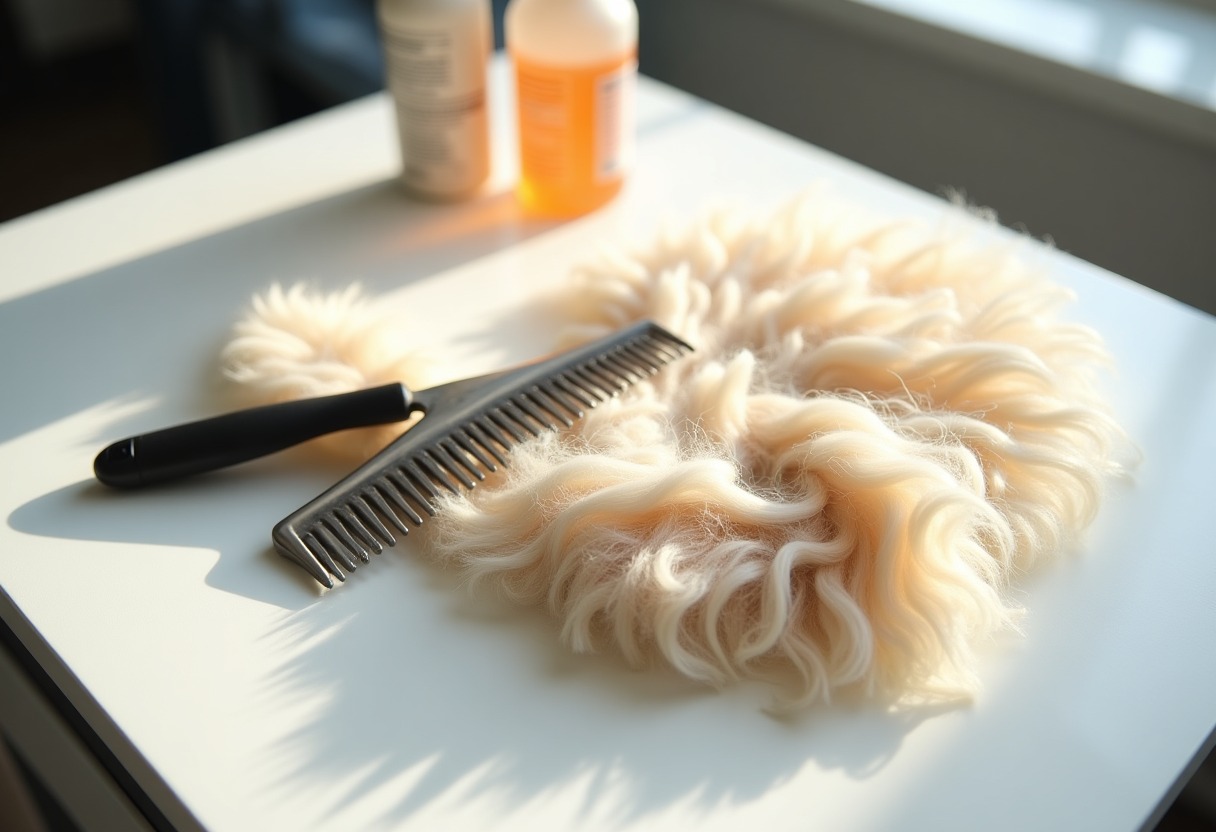
That felt mat behind your labradoodle's ear turned into a solid brick overnight, and now you're staring at it wondering whether to attempt rescue or surrender to professional grooming. Mats form faster on labradoodle coats than any other breed mix because their poodle genetics create dense, curly hair that traps debris and tangles with minimal provocation.
Why Labradoodle Coats Mat So Aggressively
Labradoodle coat structure combines the worst matting characteristics from both parent breeds. The poodle's tight curl pattern creates natural catch points for loose hair, while the labrador's double-coat genetics add an undercoat layer that sheds directly into those curls. According to the American Kennel Club, dogs with double coats require daily brushing to prevent mat formation, but labradoodles need even more frequent attention due to their unique texture combination.
F1B labradoodles typically show the most aggressive matting because they inherit 75% poodle genetics, creating extremely dense coat structure. Their hair grows continuously rather than shedding naturally, which means dead hair accumulates in the coat until manually removed. Areas with high friction—behind ears, under legs, around the collar line—develop mats within 48-72 hours without proper maintenance.
The cost of neglecting mat prevention becomes severe quickly. Professional groomers charge $20-40 extra for dematting services, and severely matted dogs often require complete coat removal, destroying months of growth and leaving your labradoodle looking like a shaved sheep for 3-4 months while the coat recovers.
Essential Dematting Tool Categories
Successful mat removal requires specific tool types designed for different stages of the process. Basic slicker brushes cannot handle established mats and will only create pain and coat damage when forced through tangles.
Mat splitters feature curved blades that slice through mat cores without cutting healthy hair. The curved design follows the natural shape of mats, allowing controlled separation from multiple angles. Quality mat splitters include safety guards to prevent accidental skin contact during aggressive dematting sessions.
Undercoat rakes address the root cause of labradoodle matting by removing loose undercoat before it tangles with guard hairs. These tools feature widely-spaced metal tines that penetrate deep into coat layers without catching on surface curls. Regular undercoat raking reduces mat formation by 70-80% compared to surface brushing alone.
Dematting combs provide precision work for small, stubborn mats that resist other tools. Their rotating teeth design allows individual tines to move independently, working around tangles rather than forcing through them. The best dematting combs feature ergonomic handles for extended grooming sessions.
For severe matting situations, power tools become necessary. Dematting rakes with vibrating heads break apart compressed mats through mechanical action, reducing the manual force required and minimizing coat damage during removal.
Tool Performance Comparison
| Tool Type | Mat Size Limit | Coat Damage Risk | Time Required | Skill Level | |-----------|----------------|------------------|---------------|-------------| | Mat Splitter | Medium to large | Low with proper technique | 5-15 minutes per mat | Intermediate | | Undercoat Rake | Prevention only | Very low | 10-20 minutes full body | Beginner | | Dematting Comb | Small to medium | Medium if rushed | 10-30 minutes per mat | Advanced | | Slicker Brush | Very small only | High on established mats | Variable | Beginner |
Recommended Dematting Tool Selection
The FURminator dematting tool stands as the gold standard for labradoodle coat maintenance because its dual-sided design handles both prevention and removal. One side features undercoat rake tines for daily maintenance, while the other provides dematting teeth for established tangles. The ergonomic handle reduces hand fatigue during extended grooming sessions, and the tool's weight provides natural pressure without requiring excessive force. → Shop FURminator dematting tool on Amazon
For severe matting situations, the Safari De-Matting Comb offers the most aggressive mat removal capability without resorting to cutting. Its dual-length teeth design addresses both surface tangles and deep mat cores in single passes. The rotating head prevents the tool from binding in thick mats, allowing continuous motion through problem areas. Professional groomers consistently recommend this tool for home use because it duplicates their dematting techniques. → Shop Safari dematting comb on Amazon
Chris Christensen mat splitters provide surgical precision for delicate areas around ears and legs where other tools prove too aggressive. The Japanese steel construction maintains sharp edges through hundreds of uses, and the safety tip prevents accidental skin puncture during close work. These tools cost more than alternatives but last indefinitely with proper care. → Shop mat splitter tools on Amazon
Cowboy Magic Detangler spray transforms impossible mats into manageable tangles when applied properly. The silicone-based formula lubricates individual hairs without weighing down the coat or creating residue buildup. Apply generously to dry mats, work in with fingers, then wait 10-15 minutes before attempting removal. This spray reduces dematting time by 50-60% on average. → Shop detangling spray for dogs on Amazon
For daily prevention, the Chris Christensen Big G slicker brush removes loose undercoat before mat formation begins. Unlike standard slicker brushes, the Big G features longer, more flexible pins that penetrate labradoodle coat depth without scratching skin. The oblong shape covers more surface area per stroke, reducing grooming time while improving thoroughness. → Shop undercoat rake labradoodle on Amazon
Advanced Dematting Techniques Most Guides Skip
Progressive sectioning prevents overwhelming both you and your labradoodle during extensive dematting sessions. Divide the coat into 2-inch square sections using clips or hair ties, then work through each section completely before moving to the next. This technique ensures no areas get missed and allows your dog rest periods between sections.
The twist-and-pull method works specifically well on labradoodle coat texture because it follows the natural curl pattern. Instead of pulling straight through mats, twist the mat in the direction of the curl while applying gentle outward pressure. The mat will often separate into smaller sections that individual tools can address.
Ice cube pre-treatment hardens stubborn mats containing sticky substances like tree sap or gum, making them brittle enough to break apart mechanically. Hold an ice cube against the mat for 30-60 seconds, then immediately work with a mat splitter while the foreign material remains frozen.
Most owners attempt dematting on dry coats, but strategic moisture application actually improves success rates. Spray small amounts of detangling solution onto individual mats, then cover the area with a warm, damp towel for 5-10 minutes. The combination of moisture and heat relaxes compressed hairs, allowing tools to penetrate more effectively.
Directional awareness proves critical for preventing coat damage during mat removal. Always work from the outer edges of mats toward the center, following the natural hair growth direction. Working against the grain creates additional tangles and increases the risk of pulling out healthy hair roots.
The hold-and-work technique protects your labradoodle's skin during aggressive dematting. Place your non-dominant hand between the mat and the skin, then apply dematting pressure against your hand rather than directly against the dog. This prevents painful pulling and allows you to gauge pressure accurately.
As covered in our Complete Labradoodle Grooming Guide, establishing a consistent routine prevents most matting problems before they develop into serious issues requiring these intensive techniques.
Frequently Asked Questions
How often should I check my labradoodle for mats? Daily coat inspection prevents minor tangles from developing into serious mats, especially during shedding seasons in spring and fall. Run your fingers through high-risk areas—behind ears, under legs, around the collar—during your regular petting routine. Early detection allows removal with basic brushing rather than specialized dematting tools. Adult labradoodles develop mats faster than puppies because their adult coat grows denser and traps more debris throughout daily activities.
Can I prevent mats by keeping my labradoodle's coat short? Shorter coats reduce matting frequency but don't eliminate the problem entirely because labradoodle hair texture creates tangles regardless of length. Maintaining a 1-2 inch coat length through regular professional grooming every 6-8 weeks provides the best balance between mat prevention and coat appearance. However, even short coats require daily brushing with proper tools like those discussed in our Best Slicker Brushes Labradoodle Coat Maintenance guide. The undercoat layer continues growing and shedding regardless of guard hair length, so removal remains necessary.
What's the difference between cheap and expensive dematting tools? Expensive dematting tools feature superior steel quality that maintains sharp edges longer, ergonomic designs that reduce hand fatigue during extended use, and precision engineering that prevents coat damage through proper weight distribution and blade angles. Cheap tools often have dull edges that tear rather than cut through mats, creating more damage and pain for your dog. The investment pays for itself within 2-3 grooming cycles because quality tools work faster and more effectively, reducing overall grooming time and stress.
Should I attempt to remove severe mats myself or go to a professional groomer? Attempt mat removal yourself only if the mat moves freely when you lift it away from the skin and you can see clear separation between the mat and healthy coat. Mats that feel tight against the skin or cover areas larger than a quarter require professional attention because improper removal risks cutting the skin or creating permanent coat damage. Professional groomers have specialized tools and experience handling difficult situations safely. The cost of professional dematting ($30-60) often proves less expensive than replacing damaged coats or treating grooming injuries.
How do I know if I'm hurting my labradoodle during dematting? Stop immediately if your labradoodle shows signs of pain including whining, trying to move away, snapping, or tensing up when you approach certain areas. Proper dematting should feel like gentle tugging rather than sharp pulling, and your dog should remain relatively relaxed throughout the process. Take frequent breaks and offer treats to maintain positive associations with grooming activities. If your dog consistently resists dematting attempts, the mats may be too advanced for home removal and require professional intervention to prevent creating negative grooming experiences that last for years.
Choose your dematting tools based on your labradoodle's specific coat type and matting patterns rather than generic recommendations, because the right equipment makes the difference between successful home grooming and expensive professional rescue missions.
Some links on this page are affiliate links. We may earn a small commission if you purchase through them, at no extra cost to you.
As an Amazon Associate we earn from qualifying purchases. This article contains affiliate links; if you buy through them we may earn a small commission at no additional cost to you.